Deutsch
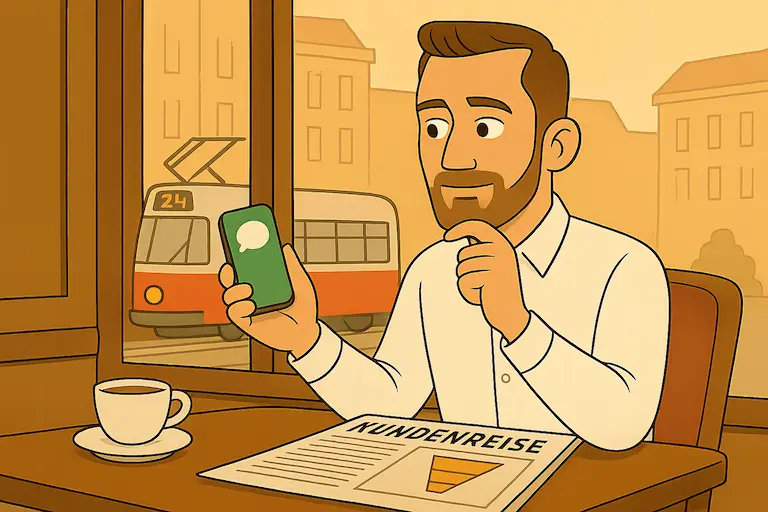
The other morning I was sitting in Café Schwarzenberg in Vienna. The cappuccino was wonderfully fragrant, a gentleman at the piano played soft classical tunes, and the waiter grumbled in that uniquely charming Viennese way the perfect Vienna vibe, almost like something straight out of a glossy travel magazine.
It reminded me of a chat I’d had with a colleague a few days earlier: Our customer journeys in marketing often look more like travel brochures than real life. Neat, polished, unrealistic.
In my last post I talked about customer centricity . Today I want to take it a step further: It’s not enough to design the perfect journey we need to truly grasp the Customer Reality.
Postcard journeys meet everyday life
Customers don’t move through funnels step by step. They start browsing on the tram, send a quick WhatsApp, check out the competition, add something to the cart, and then end up buying offline at the shop around the corner.
And when they do decide to buy online, it has to be as simple as possible! Every unnecessary click is a stumbling block. The clearer and faster the process, the better.
Buying online? Please, no click marathon!
Recent studies are clear:
One-click checkout boosts spending and engagement: on average, customers buy 28.5% more items, stay longer on the site, and are more satisfied (Cornell University).
Checkout hurdles are conversion killers: up to 70% of purchases fail due to poor checkout flows (Baymard Institute).
Visa Click to Pay & co. save time (up to 20 seconds per purchase) and significantly reduce cart abandonment and fraud rates (Business Insider).
The takeaway: Simplicity wins. Online and offline.
Conclusion
Customer Experience doesn’t mean painting a glossy journey and cramming every single piece of customer data into a 20-step funnel – it means understanding the real world. With all its jumps, breaks, and shortcuts.
Or as in the coffeehouse:
Waiter: “Anything else for you?”
Me: “No thanks – just the bill.”
Waiter: “Coming right up, cash or card?”
Less planning, more feeling. Maybe that’s something we should remind ourselves of – not just in marketing, but in every click path.
Between Trams, WhatsApp & Coffeehouses Customer Reality: The art of understanding real paths in the funnel

Related Posts