Deutsch
The other day, I was sitting with a few colleagues – somewhere between industry talk and two espresso martinis.
One of them, eyes shining, said:
“Honestly: in the near future we won’t need anyone in marketing anymore!”
I frowned. “Why’s that?”
His answer came quicker than the bartender with the next round:
“ChatGPT 5 – AI can now do everything, and even more!”
I smiled, took a sip of my drink, and thought:
Sure… but not quite. (Since I’m not the type to kill someone’s excitement right away, I let him continue.)
What AI Really Does Well
Automation is no longer a futuristic dream – it’s already reshaping how we plan campaigns, create content, and communicate with customers.
Real-time personalization: analyze data, detect patterns, deliver tailored messages.
Content creation: text, images, videos – in seconds, often at surprising quality.
Performance optimization: forecasts, budget allocation, sharper audience targeting.
Routine tasks: from bidding strategies to lead scoring – much already runs on autopilot.
What Gets Lost in the Hype
In all the excitement, we often forget: Marketing is more than automation.
The fundamentals always count: Product, Price, Place, Promotion – without a solid base, even the smartest AI won’t save you.
Customer focus: journeys must be clear and intuitive – no clever newsletter CTA will fix a confusing process.
Long-term visibility: brands grow through consistency, reach, and creative ideas – not shortcuts.
And let’s not forget offline touchpoints. Whether it’s a bank branch or a trade fair booth – AI can provide information, but the smile at the counter still comes from a human.
Why Humans Remain Essential
AI can recognize patterns – but not when to break the rules to spark attention.
It understands tone – but not cultural nuance with a wink.
It optimizes – but it doesn’t inspire.
Conclusion
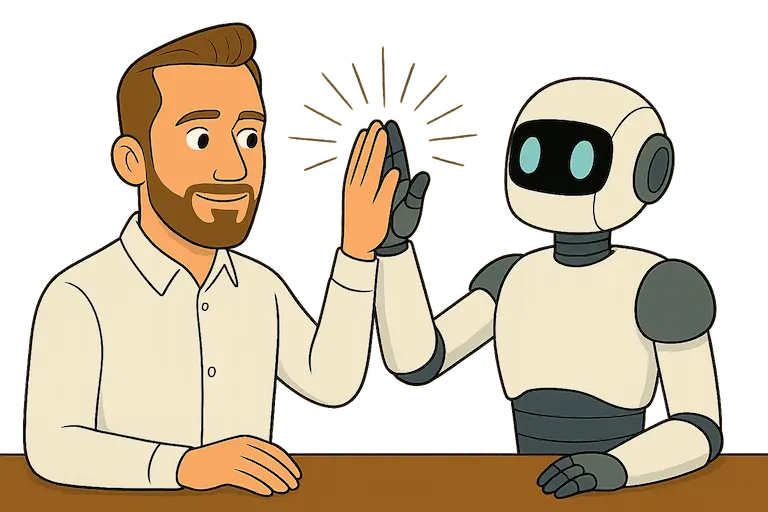
Automation is not the enemy. It’s a tool. A powerful one that frees us up.
But in the end, it’s the person holding it that makes the difference.
The future of marketing belongs to those who combine machine precision with human empathy
Will Marketing Soon Need No Humans Anymore?

Related Posts